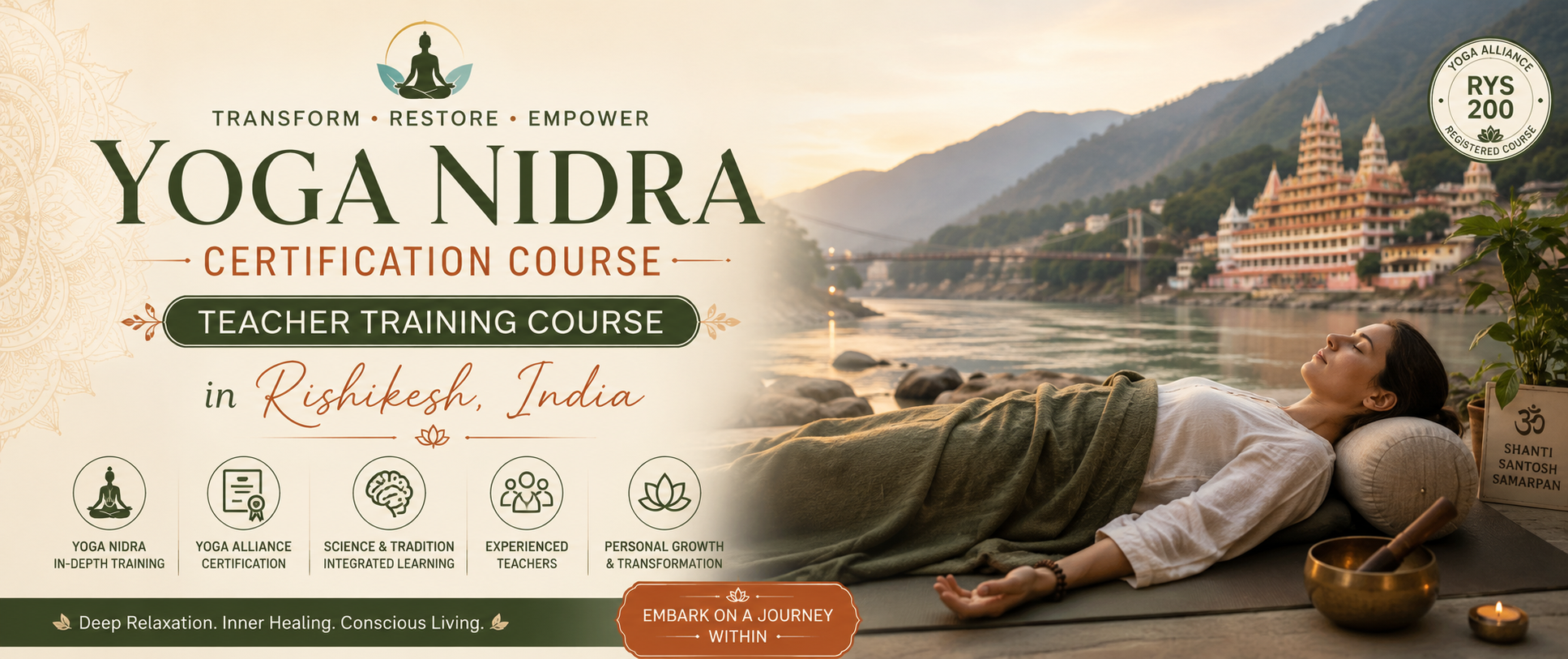



Yoga Nidra Teacher Training in Rishikesh, India
The Ancient art of Yogic Sleep.
The program typically blend traditional Satyananda techniques with modern neuroscience and practical teaching methodology.

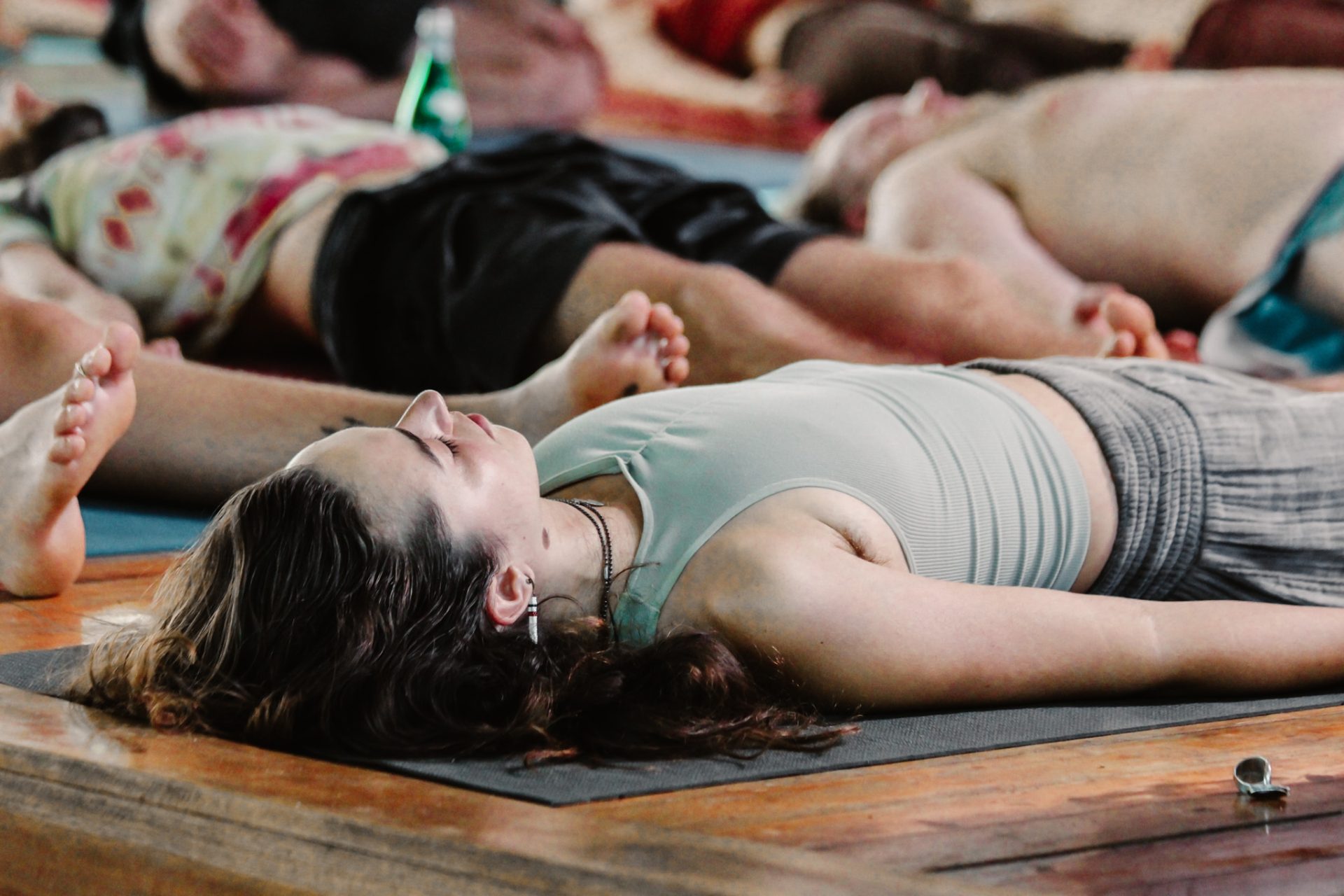

Yoga Nidra Teacher Training Course Rishikesh
Begin your healing journey by cleansing your chakras and attaining heightened awareness through deep relaxation techniques with our intense and personalized Yoga Nidra TTC in Rishikesh.
Yoga Nidra Teacher Training Course Overview
Founded on traditional yogic philosophies and supported by modern scientific research, our 50-Hour & 100-Hr Yoga Nidra TTC Program will give you an in-depth understanding of the theory and practice of Yoga Nidra, the ancient art of deep awareness in relaxation.
Yoga Nidra is not only a relation practice bus also leads somebody to a deep state of meditation and inner peace. Whether you’re a yoga teacher, meditation coach, therapist, or someone seeking guided relaxation teacher training for personal healing, this Yoga Nidra TTC in Rishikesh will help you understand, experience, and teach true deep rest.
You’ll learn how to use voice, breath, and intention to lead others safely into deep stillness.
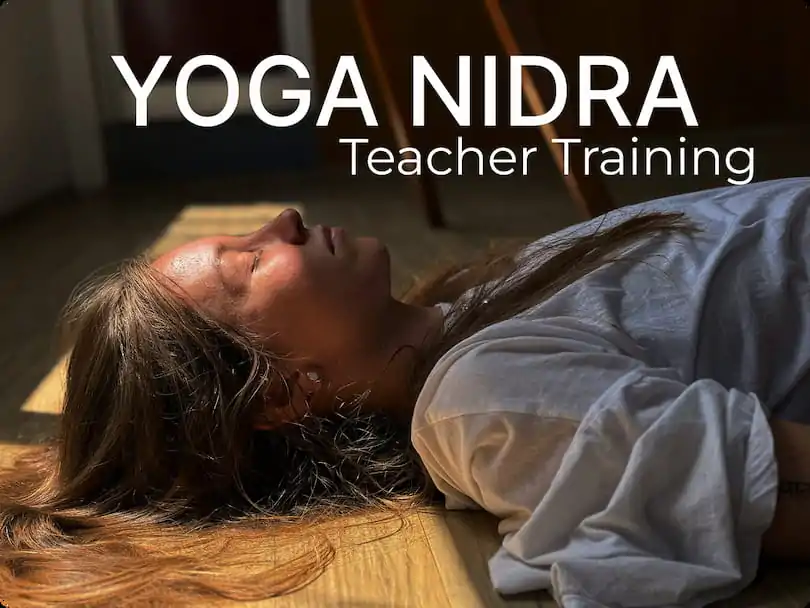
Yoga Nidra Course Outline
A comprehensive Yoga Nidra course typically covers the history, science, and methodology of "yogic sleep," focusing on training practitioners to guide deep relaxation sessions. Core topics include the stages of Yoga Nidra, script creation, voice modulation, and utilizing intention (Sankalpa) to foster mental and physical healing.
The course typically include guided practice sessions, script creation, studies on Sankalpa (intention), and internationally recognized certification with intensive in-person training in locations like Rishikesh.
Foundations of Yoga Nidra
- Origins: History, Tantra, and Vedanta roots.
- What is Yoga Nidra: Defining "yogic sleep" (a state between wakefulness and sleep).
- Science and Neuroscience: Understanding brain waves, autonomic nervous system regulation, and the reduction of cortisol.
- Benefits: Stress management, insomnia relief, trauma release, and emotional regulation.
The 7 Stages of Yoga Nidra Practice
- Preparation: Settling in, creating a comfortable environment (Shavasana).
- Intention (Sankalpa): Embedding a positive affirmation in the subconscious.
- Body Scan (Rotation of Consciousness): Systematically directing awareness through body parts.
- Breath Awareness: Observing the natural breath to calm the mind.
- Visualization/Guided Imagery: Exploring symbols or scenarios for emotional healing.
- Witnessing Consciousness: Observing thoughts without attachment.
- Integration/Awakening: Gently returning to alertness.
Teaching Methodology & Techniques
- Script Construction: Developing thematic scripts.
- Voice & Tone: Mastering pace, pause, and voice modulation.
- Class Structuring: Developing sequences for individuals and groups.
- Trauma-Informed Care: Using safe language and holding space.
Integration and Ethics
- Integrating Yoga Nidra into daily life.
- Ethical considerations, boundary setting, and self-care for facilitators.
Comprehensive Training: Covers the philosophy, techniques, and stages of Yoga Nidra, including body scanning and guided imagery.
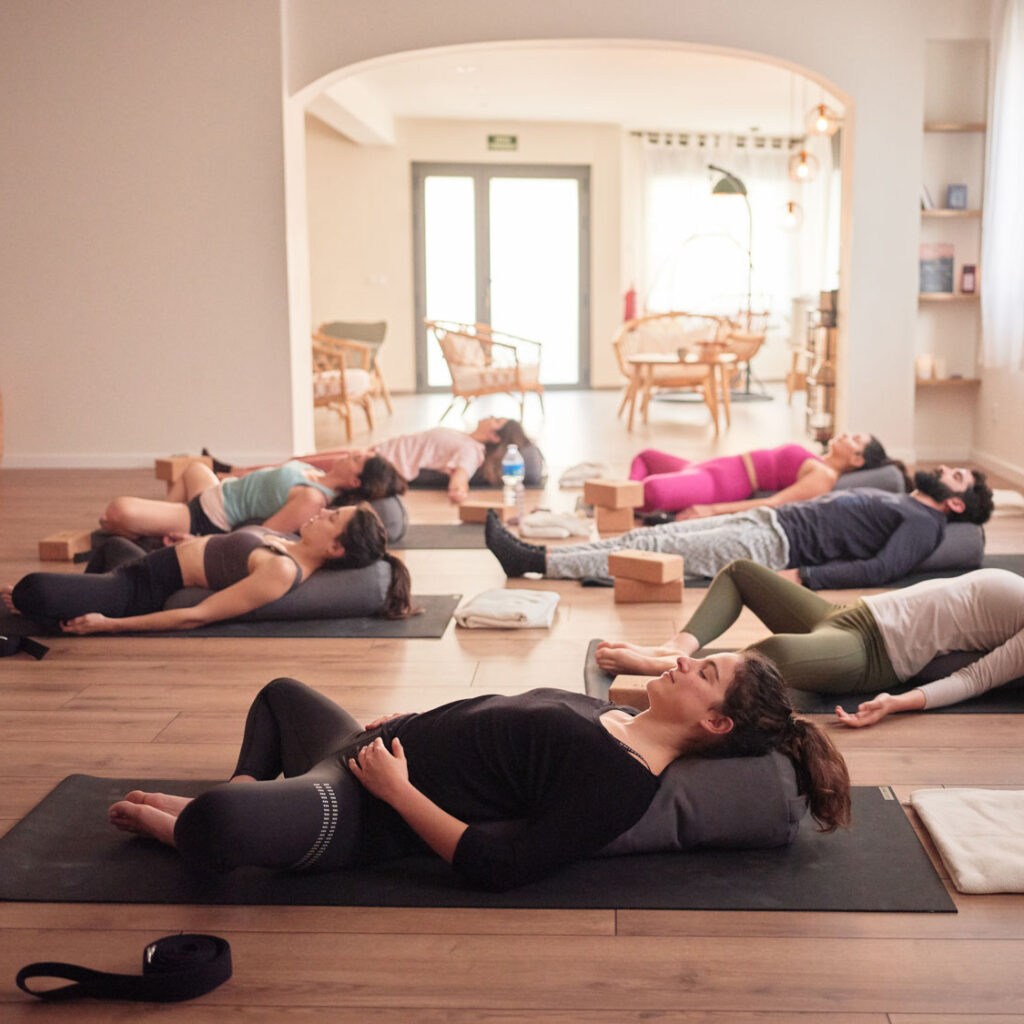

Step-by-Step Yoga Nidra Practice
- Prepare Your Space: Find a quiet, dark, and comfortable space. Lay down on a yoga mat or bed, using a blanket or pillow for support if needed.
- Lie in Shavasana (Corpse Pose): Lie on your back, feet slightly apart, arms away from the body, palms facing up, and eyes closed.
- Set Your Intention (Sankalpa): Set a short, positive intention (e.g., "I am calm," "I am rested") and repeat it mentally three times.
- Rotation of Consciousness (Body Scan): Mentally bring awareness to different body parts in a specific sequence, relaxing each part as you go: starting from the right-hand thumb, moving to the fingers, palm, arm, side, leg, and then to the left side and back of the body.
- Breath Awareness: Simply observe your natural breath without changing it, feeling the abdomen rise and fall.
- Visualize and Experience Sensations: Imagine calming images (e.g., a quiet beach, warm sunlight) or experience sensations like heaviness and lightness throughout the body.
- Reaffirm Intention: Repeat your Sankalpa once more.
- Return to Awareness: Gently return to awareness of the room, move your fingers and toes, and turn onto your right side, sitting up slowly.

Course Dates
Begin a deep inner journey toward self-awareness, healing, and transformation.
| Course Date | Triple Sharing Room | Double Sharing Room | Single Room |
|---|---|---|---|
| 50 Hours Nidra Yoga TTC in Rishikesh | |||
| 1st – 7th day of Every Month | € 690 Euro | € 780 Euro | € 920 Euro |
| 100 Hours Nidra Yoga TTC in Rishikesh | |||
| 1st – 12th day of Every Month | € 690 Euro | € 780 Euro | € 920 Euro |
What’s included
- Accommodation During Course
- 3 daily vegetarian meals, tea and snacks
- Course program
- Yoga Nidra & Meditation
- Certificate of completion
- 1 notebook and a pen
- 1 neti pot and 1 basti pot

Why is Nidra Yoga so popular among youths?
Nidra Yoga (yogic sleep) is popular among youths because it offers a highly accessible, low-effort way to instantly combat high stress, academic pressure, and fatigue. It provides deep relaxation and mental clarity, often equated to several hours of sleep in just a 30-minute session, making it an efficient tool for mental health and focus.
- Accessible Relaxation: Unlike traditional seated meditation, Nidra Yoga is performed lying down, making it more accessible for beginners. It is often described as a guided, effortless, and restful awareness.
- Rapid Stress Management: It acts as a powerful intervention to switch from a "fight or flight" (sympathetic) state to "rest and digest" (parasympathetic), crucial for managing daily anxiety and burnout.
- Boosts Academic/Work Performance: It aids in improving memory, cognitive function, and concentration, which helps students facing high-pressure school or work environments.
- Balances Emotional Well-being: Regular practice reduces frustration levels in adolescents, helping them navigate peer pressure, body image concerns, and uncertainty.
- Combats Insomnia and Fatigue: It improves sleep patterns and provides rest equivalent to 2–4 hours of sleep in a 45-minute session.
Youths often turn to this practice for its ability to provide immediate relaxation, emotional regulation, and an overall sense of peace.
Why Choose Meditation Yoga Academy for Yoga Nidra TTC in Rishikesh?
Meditation Yoga Academy in Rishikesh is a premier choice for Yoga Nidra Teacher Training (TTC) due to its authentic, traditional approach, expert faculty, and serene, focused environment. The program provides comprehensive, Yoga Alliance-recognized certification, combining deep theoretical knowledge of relaxation science with practical, structured training, making it ideal for both beginners and experienced practitioners.
- Authentic Traditional Teachings: The academy emphasizes authentic yogic techniques rooted in classical traditions, allowing students to explore the deepest levels of consciousness through Yoga Nidra.
- Expert and Supportive Faculty: Courses are guided by seasoned, certified instructors who provide personalized mentorship, daily guidance, and feedback to ensure high proficiency in both practice and teaching.
- Comprehensive Curriculum: The curriculum is expertly designed, balancing theory, philosophy, relaxation science, and practical teaching methodology (practicum) to enable students to lead effective sessions.
- Serene Location for Deep Practice: Located in Rishikesh, the "Yoga Capital of the World," the academy provides a peaceful setting surrounded by nature, conducive to deep meditation and inward reflection.
- Globally Recognized Certification: The academy provides certification recognized by the Yoga Alliance, which is a major advantage for those looking to build a professional career as a Yoga Nidra instructor.
- Small Batch Sizes: To ensure individual attention, the academy keeps class sizes small, allowing for better interaction, personalized posture corrections, and a supportive environment.
- Focus on Holistic Wellness: The training includes yogic lifestyle practices, including sattvic, nutritious food, to strengthen the body and mind during the intensive training.
- Specialized Facilities: The academy often offers dedicated, serene spaces for meditation and yoga, enhancing the overall experience of deep relaxation and spiritual growth.
Daily Schedule Yoga Nidra TTC in Rishikesh?
A typical daily schedule for a Yoga Nidra Teacher Training Course (TTC) in Rishikesh starts around 6:00 AM, blending physical Hatha/Asana practice, pranayama, and intensive Yoga Nidra theory or guided sessions. Days are structured around meditation, philosophy, script development, and afternoon self-practice.
- 06:00 AM – 07:30 AM: Hatha Yoga / Asana Practice
- 07:30 AM – 08:30 AM: Pranayama / Mantra Chanting
- 08:00 AM – 09:00 AM: Guided Yoga Nidra / Meditation
- 09:00 AM – 10:00 AM: Breakfast & Rest
- 10:00 AM – 12:00 PM: Yoga Nidra Philosophy / Anatomy of Sleep
- 12:00 PM – 01:00 PM: Voice Training & Script Development
- 01:00 PM – 02:00 PM: Lunch & Rest
- 03:00 PM – 04:00 PM: Self-Practice / Assignments
- 04:00 PM – 05:30 PM: Yoga Nidra Practical Sessions
- 06:00 PM – 07:00 PM: Evening Meditation / Q&A
- 07:00 PM – 08:00 PM: Dinner
- 08:00 PM – 09:30 PM: Light study / Self-Reflection & Early Lights Out.
Lead Instructor
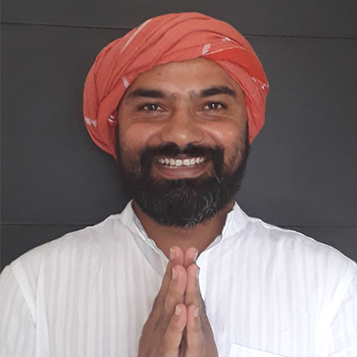
Yogi Prakash
Well-known yoga and meditation teacher in Rishikesh, India.
Yogi Prakash is a well-known yoga and meditation teacher based in Rishikesh, the world capital of yoga. He is the founder of the Meditation Yoga Academy, which is registered with Yoga Alliance USA.
- Background: A native of Rishikesh, he has over 18 years of experience teaching across Asia, including Singapore, Macau, and Hong Kong.
- Education: He holds a postgraduate diploma in Yoga Education from the renowned Triguna Yoga in Rishikesh.
- Specialisations: He focuses on Hatha Yoga, Pranayama (yogic breathing), and deep relaxation techniques. His teaching philosophy emphasizes the unity of body and mind through mindfulness and posture perfection.
- Focus: Leads retreats and teacher training that emphasize spiritual essence and inner growth.